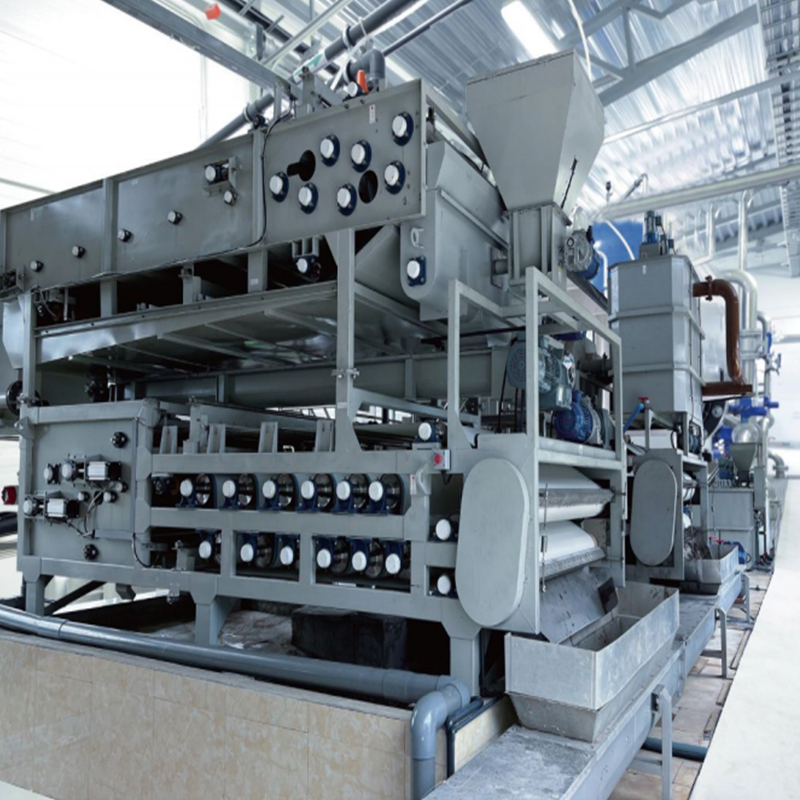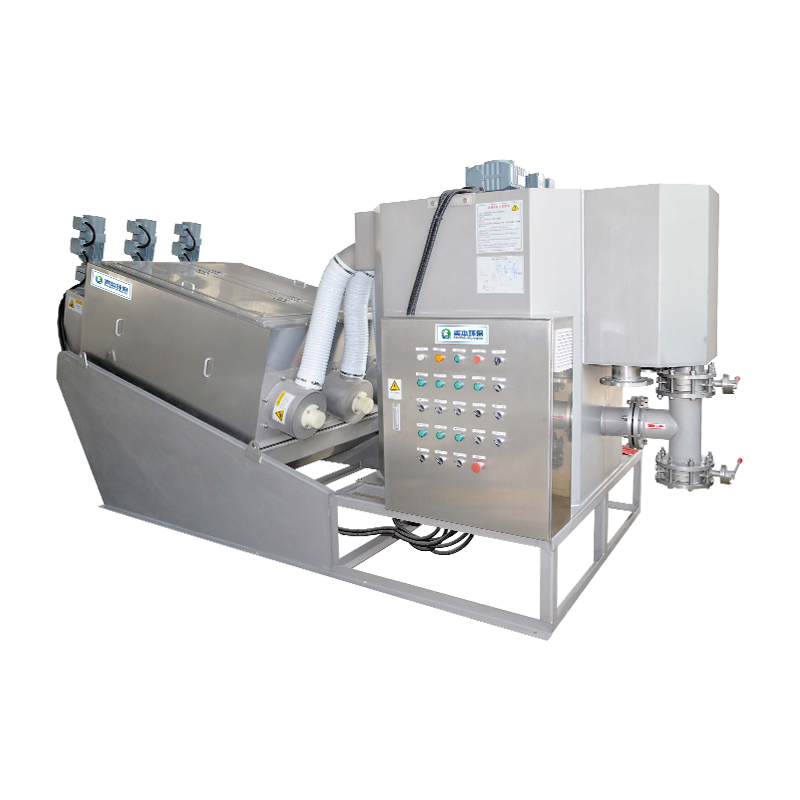


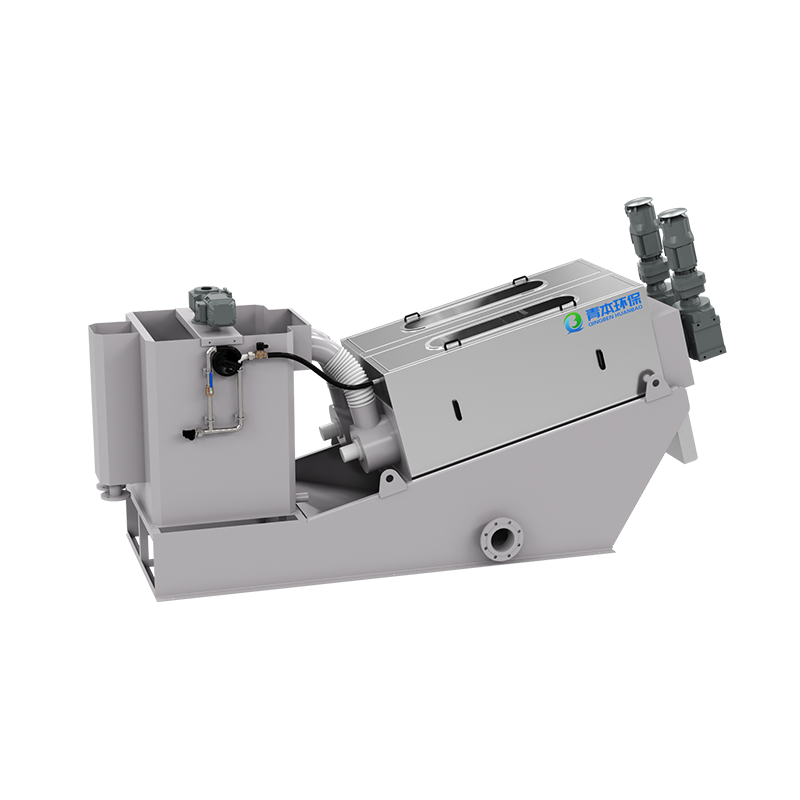

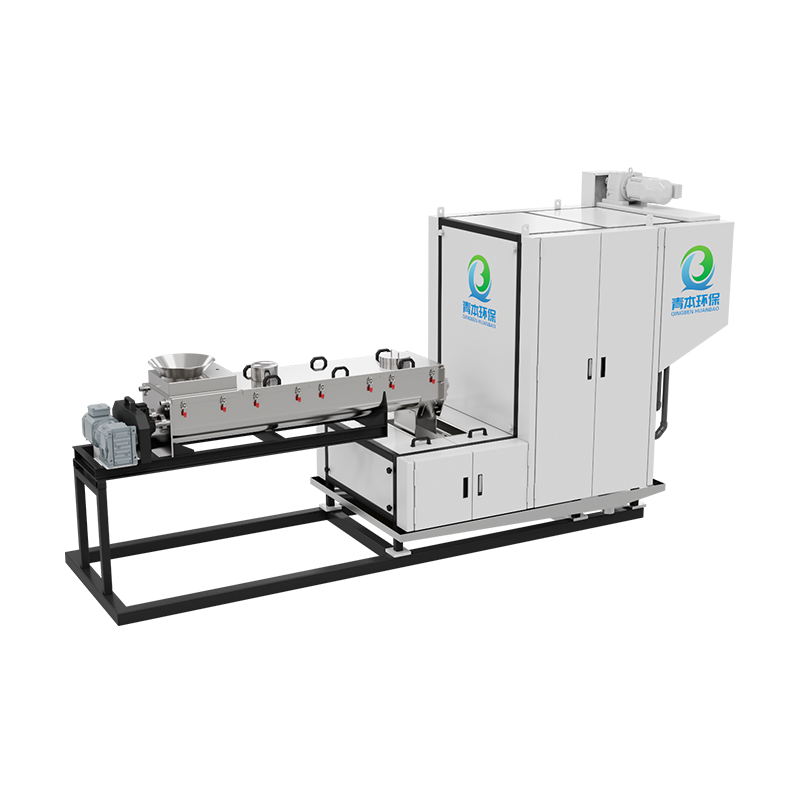

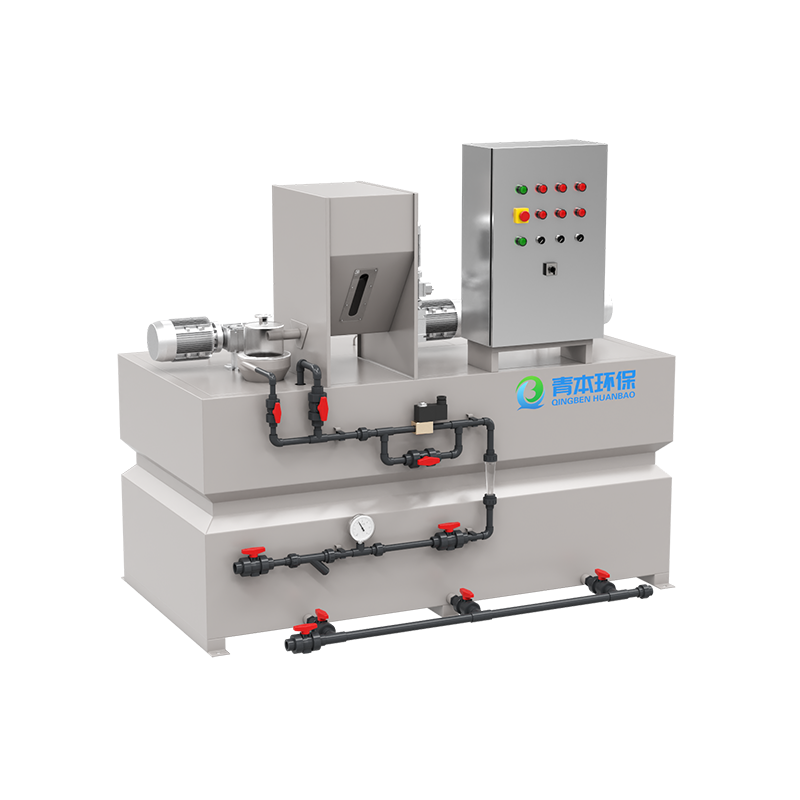

A screw press sludge thickener is a mechanical equipment unit designed to continuously concentrate and separate excess sludge — particularly from secondary sedimentation tanks in wastewater treatment plants — by applying progressive compression through a rotating screw shaft within a cylindrical filter screen. The result is a stable, adjustable sludge concentration output typically ranging from 90% to 96% solid capture rate, achieved without the need for a conventional gravity thickening tank. This makes the screw press sludge thickening system one of the most space-efficient and operationally streamlined solutions in modern sludge treatment.
Unlike traditional thickening methods that require large sedimentation tanks, significant land area, and manual monitoring, a screw press sludge preconcentration conch machine operates fully automatically, with low energy consumption and minimal odor release. It can serve as primary pretreatment equipment for downstream dewatering systems including high-pressure elastic presses, diaphragm plate frames, and deep dewatering equipment — significantly improving the overall capacity and efficiency of the sludge handling system.
This article provides a comprehensive technical and practical guide to screw press sludge thickeners — how they work, what differentiates them from alternative equipment, key performance metrics, and guidance for operators, engineers, and procurement teams evaluating industrial sludge dewatering solutions.
How Does a Screw Press Sludge Thickener Work?
The operating principle of a screw press sludge dewatering machine used for thickening is based on the combined action of filtration, gravity drainage, and mechanical compression. Sludge is fed into the inlet of a cylindrical stainless steel filter screen. Inside, a helical screw shaft rotates slowly and continuously, moving the sludge from the feed zone toward the discharge end while simultaneously compressing it against a back-pressure plate or cone.
In the early (inlet) zone, free water drains rapidly through the filter screen under gravity. As the sludge advances along the screw, the channel volume between flights decreases progressively, generating mechanical pressure that squeezes out additional bound and interstitial water. The filtrate — separated water — exits through the screen and is collected for further treatment or discharge, while the thickened sludge cake exits through the discharge port. The discharge concentration is adjustable via the back-pressure mechanism and feed flow rate.
Key Components of the System
- Helical screw shaft: The core moving part, typically made of stainless steel. Its pitch decreases toward the discharge end to generate progressive compression.
- Cylindrical filter screen: A perforated or wedge-wire screen that allows filtrate to pass while retaining sludge solids.
- Back-pressure device: Adjustable cone or plate at the discharge end that controls the output dryness of the sludge cake.
- Drive unit: Low-speed, high-torque geared motor with minimal energy draw — typically 0.75 kW to 3 kW per unit depending on capacity.
- Automatic control panel: PLC-based system for unattended 24-hour operation, with alarms for abnormal conditions.
- Spray cleaning system: Integrated automatic washing nozzles that periodically clean the filter screen to prevent blinding.
Screw Press Sludge Thickener: Process Flow
Figure 1: Process flow of a screw press sludge thickener from inlet feed to thickened cake discharge. Filtrate is separated in both the gravity drainage zone and the compression zone, maximizing solid-liquid separation efficiency. The entire process is continuous and automatic, requiring no operator intervention during steady-state operation.
What Is Sludge Preconcentration and Why Does It Matter?
Sludge preconcentration refers to the process of increasing the solid content of dilute sludge — typically from 0.3%–1.0% total suspended solids (TSS) as it exits the secondary sedimentation tank — to a higher concentration of 2%–6% TSS before it enters the primary dewatering equipment. This step is critical because most dewatering machines, including belt presses and centrifuges, perform significantly better when fed with pre-thickened sludge rather than raw dilute sludge.
Without preconcentration, dewatering equipment must process large volumes of water-laden sludge, reducing throughput, increasing polymer consumption, and generating more liquid effluent that must be returned to the head of the plant. With effective sludge preconcentration equipment for wastewater treatment, operators can reduce the volumetric load on dewatering machinery by up to 70–80%, dramatically improving overall system efficiency and reducing operational costs.
The screw press thickener excels at preconcentration because it handles dilute, fluffy biological sludge gently, without the shear forces that can break apart flocs and impair downstream dewatering. Its low-speed rotation and gradual compression preserve floc structure, which is critical for achieving high cake dryness in the subsequent step.
Sludge Solid Content: Before and After Screw Press Thickening (%TSS)
Figure 2: Comparison of sludge solid content (% TSS) before and after screw press thickening across three sludge types. In all cases, the screw press thickener increases solid concentration by 5–7 times, from sub-1% to 4%–5% TSS. This dramatic increase directly reduces the volumetric load on downstream dewatering equipment and improves overall plant efficiency.
Key Advantages of the Screw Press Sludge Thickening System
The automatic sludge thickening machine based on the stacked screw (conch) design offers a distinct set of operational and infrastructure advantages over conventional gravity thickeners, dissolved air flotation (DAF) thickeners, and drum thickeners. These advantages are especially significant in retrofit applications and facilities with limited footprint.
- No thickening tank required: The compact inline design eliminates the need for a separate concrete thickening tank, reducing civil construction costs and land use by a significant margin.
- Low energy consumption: Drive motor power typically ranges from 0.75 kW to 3 kW per unit, far below centrifugal thickeners (often 15–37 kW) for equivalent sludge volumes.
- Reduced odor and phosphorus release: The closed, continuous operation minimizes anaerobic conditions that cause H2S odor and phosphorus release — a critical advantage in urban and sensitive environments.
- Fully automatic operation: PLC control enables unmanned 24/7 operation with auto-start, auto-stop, and fault alarm capabilities, reducing labor requirements substantially.
- Adjustable output concentration: The thickened sludge concentration is stable and adjustable in the range of 90%–96% solid capture, adapting to different downstream requirements.
- Compatible with multiple downstream systems: Output sludge is directly suitable for high-pressure elastic presses, high-pressure diaphragm plate frames, belt presses, and deep dewatering equipment.
- Low maintenance: The slow-speed screw (typically 1–5 RPM) produces minimal wear, and the self-cleaning spray system prevents screen blinding without manual intervention.
Energy Consumption Comparison: Thickening Technologies (kWh per ton dry solids)
Figure 3: Estimated energy consumption per ton of dry solids for four common sludge thickening technologies. The screw press thickener consumes approximately 18 kWh per ton of dry solids — roughly one-tenth of the centrifugal thickener — making it the most energy-efficient option for low energy sludge dewatering applications. This energy advantage compounds over thousands of operating hours, delivering substantial lifecycle cost savings.
Screw Press Thickener vs. Other Sludge Thickening Technologies
Selecting the right sludge thickening equipment for a given application requires a systematic comparison of technologies across multiple performance and operational dimensions. The table below summarizes how the screw press thickener compares to the three most common alternatives:
| Parameter | Screw Press Thickener | Gravity Thickener | DAF Thickener | Centrifuge |
|---|---|---|---|---|
| Output TSS | 4%–6% | 2%–4% | 3%–6% | 5%–8% |
| Energy Use | Very Low | Low | Moderate | High |
| Footprint | Compact | Large tank required | Moderate | Compact |
| Automation | Fully Automatic | Semi-manual | Moderate | Automatic |
| Odor Control | Excellent | Poor (open tank) | Good | Good |
| Maintenance | Low | Low–Medium | Medium | High |
| Suited for Bio-Sludge | Excellent | Good | Good | Moderate |
The screw press thickener occupies a particularly strong position for activated sludge from biological treatment processes, where its gentle handling preserves floc structure and its fully enclosed design addresses odor management requirements. For facilities seeking to eliminate thickening tank construction and move toward a fully automated, low-maintenance sludge handling line, the screw press is often the preferred choice among wastewater treatment equipment manufacturers.
Radar: Screw Press Thickener vs. Gravity Thickener (Score 0–10)
Figure 4: Radar comparison of screw press thickener vs. gravity thickener across six key performance dimensions. The screw press thickener achieves near-maximum scores in energy efficiency, automation, and odor control — dimensions where gravity thickeners score poorly due to their open-tank, semi-manual nature. The footprint advantage of the screw press is especially significant in retrofit projects where space constraints are a limiting factor.
Typical Applications and Compatible Downstream Equipment
The screw press sludge thickening system is suited to a broad range of sludge types and treatment contexts. Its gentle processing action and adjustable output make it compatible with diverse downstream dewatering configurations:
Suitable Sludge Types
- Activated sludge (excess biological sludge) from municipal wastewater treatment plants
- Mixed sludge (primary + secondary sludge blend)
- Industrial wastewater sludge from food processing, paper mills, and textile dyeing
- River and lake sediment after dredging operations
- Sludge from membrane bioreactor (MBR) systems
Compatible Downstream Dewatering Equipment
As a pretreatment step, the screw press thickener significantly improves the performance of:
- High-pressure elastic screw presses: Thickened feed reduces required press length and polymer dosing
- High-pressure diaphragm plate frame filter presses: Pre-concentrated sludge reduces filling time and improves cake dryness
- Belt filter presses: Higher feed solids reduce belt washwater consumption and belt wear
- Deep dewatering systems: Pre-thickened sludge is essential for achieving the sub-40% moisture content required for direct landfill disposal or incineration
- Thermal drying equipment: Higher solids content entering the dryer directly reduces energy consumption for evaporation
Downstream Dewatering Efficiency vs. Feed Sludge TSS Concentration
Figure 5: Relationship between feed sludge TSS concentration and downstream dewatering efficiency. As feed solids increase from 0.5% to 5%, dewatering efficiency improves markedly — reflecting reduced hydraulic load, lower polymer demand, and improved cake solids. The highlighted zone (4%–5%) represents typical screw press thickener output, placing the downstream dewatering system in its optimal operating range.
Performance Specifications and Selection Criteria
When evaluating a screw press sludge thickener manufacturer or selecting equipment for a specific project, the following performance parameters should be specified and verified through factory testing or third-party certification:
| Parameter | Typical Range | Notes |
|---|---|---|
| Feed Sludge Concentration | 0.2%–1.5% TSS | Suitable for dilute bio-sludge |
| Output Sludge Concentration | 4%–6% TSS | Adjustable via back-pressure |
| Solid Capture Rate | 90%–96% | Depends on polymer dosing |
| Drive Motor Power | 0.75–3 kW | Per unit; varies with capacity |
| Screw Speed | 1–5 RPM | Low-speed, high-torque design |
| Processing Capacity | 5–500 m³/h | Multiple units in parallel for large scale |
| Screen Material | 304 / 316L Stainless Steel | 316L for aggressive wastewater |
| Control System | PLC Fully Automatic | Remote monitoring optional |
For OEM procurement and large-scale projects, specifiers should also consider whether the sludge treatment equipment supplier can provide performance guarantee test data under conditions representative of the specific sludge characteristics (SVI, MLSS, temperature) at the target facility. Working with a supplier that offers project-specific design and pilot testing reduces the risk of underperformance after installation.
Infrastructure Savings: Eliminating the Thickening Tank
One of the most significant — and often underappreciated — benefits of the screw press sludge thickening system is the elimination of the conventional gravity thickening tank. In traditional wastewater treatment plant design, a gravity thickener typically occupies a dedicated concrete tank with a diameter of 8–20 meters, a mechanical rake mechanism, overflow weirs, and associated pipework. This represents a substantial civil engineering investment and land requirement.
By replacing the gravity thickener with a compact inline screw press unit, plants can redirect that land for other uses, avoid the cost of concrete tank construction, and eliminate the mechanical rake maintenance associated with large tank equipment. For retrofit projects — where expansion space is constrained — this is often the decisive factor in selecting the screw press approach.
Additionally, gravity thickening tanks are a known source of anaerobic odors and phosphorus release. When sludge sits in a tank for hours under conditions of reduced oxygen, biological processes generate hydrogen sulfide (H2S) and release dissolved phosphorus back into the liquid phase. This increases odor control costs and can compromise the performance of the plant's phosphorus removal process. The continuous, rapid processing in a screw press thickener eliminates these detention-time-related problems entirely.
Infrastructure Cost Index: Gravity Thickener vs. Screw Press System (Relative, 100 = Gravity Baseline)
Figure 6: Relative infrastructure cost index for gravity thickener vs. screw press sludge thickening system. The screw press system reduces civil construction costs to approximately 35% of the gravity thickener baseline, requires only 20% of the land area, and cuts odor treatment costs by up to 85% by eliminating open-tank anaerobic conditions. These savings are particularly significant in high-density urban installations and plant expansion projects with limited available space.
About Qingben Environmental Technology (Jiangsu) Co., Ltd.
Qingben Environmental Technology (Jiangsu) Co., Ltd. is a professional enterprise specializing in the manufacturing and service of sludge and wastewater treatment equipment. As an experienced OEM sludge dewatering machine producer and sludge handling system supplier, the company focuses on research, development, and production of sludge dewatering machines, sludge drying equipment, complete sets of wastewater treatment equipment, river and lake sediment drying equipment, and related technical services.
The company's screw press sludge preconcentration conch machine inherits the technical characteristics of low energy consumption, high efficiency, fully automatic control, and stable operation established through years of cascade sludge dewatering machine development. It is capable of directly processing dilute sludge from secondary sedimentation tanks rapidly and continuously, delivering stable, adjustable output concentrations in the 90%–96% solid capture range.
As a recognized wastewater treatment equipment manufacturer, Qingben provides comprehensive technical support across the full project lifecycle — from initial consultation and system design through construction, commissioning, and long-term operation and maintenance. The company's commitment to customer success and technical innovation underpins every project it undertakes.
Frequently Asked Questions
Q1: What is a screw press sludge thickener?
A screw press sludge thickener is a mechanical device that continuously concentrates dilute sludge by rotating a helical screw inside a cylindrical filter screen. Sludge is fed at one end, water drains through the screen, and the rotating screw compresses the sludge toward the discharge end, producing a thickened cake with significantly higher solid content — typically 4%–6% TSS from a feed of 0.3%–1% TSS.
Q2: How does a screw press sludge dewatering machine work?
Sludge is fed into the inlet of the machine, where it first undergoes gravity drainage through the perforated filter screen. As the screw rotates slowly, it transports the sludge toward the outlet while simultaneously compressing it due to a decreasing screw pitch and the resistance of the back-pressure plate. Free and interstitial water escapes through the screen, while the remaining solids exit as a thickened cake. The process is continuous, automatic, and requires no manual supervision during operation.
Q3: What is sludge preconcentration?
Sludge preconcentration is the process of increasing the solid content of dilute sludge before it enters primary dewatering equipment. Raw sludge from secondary clarifiers typically contains only 0.3%–1% total suspended solids. Preconcentration raises this to 3%–6% TSS, reducing the volumetric load on downstream equipment by up to 80%, lowering polymer consumption, and significantly improving dewatering efficiency and cake dryness.
Q4: Does a screw press thickener require a thickening tank?
No. One of the key advantages of the screw press sludge thickening system is that it eliminates the need for a dedicated thickening tank. The inline design processes sludge continuously as it flows from the secondary clarifier, without any detention time or large concrete tank infrastructure. This reduces civil construction costs, land use, and eliminates the odor and phosphorus release problems associated with conventional thickening tanks.
Q5: What types of sludge is the screw press thickener suitable for?
The screw press thickener is well-suited for activated sludge (biological excess sludge), mixed sludge from primary and secondary treatment, industrial wastewater sludge from food, paper, and textile sectors, MBR sludge, and river or lake sediment. Its gentle, low-speed compression action preserves floc structure and avoids the shear-induced floc breakage that can impair performance in high-speed centrifugal equipment.
Q6: How is sludge thickening different from sludge dewatering?
Sludge thickening increases solid content from around 0.5%–1% TSS to 3%–6% TSS, primarily by removing free water — the sludge remains pumpable after thickening. Sludge dewatering goes further, reducing moisture content to produce a semi-solid cake with 15%–30% or higher dry solids, suitable for transport and disposal. Thickening is a pretreatment step that greatly improves the efficiency of the subsequent dewatering process.