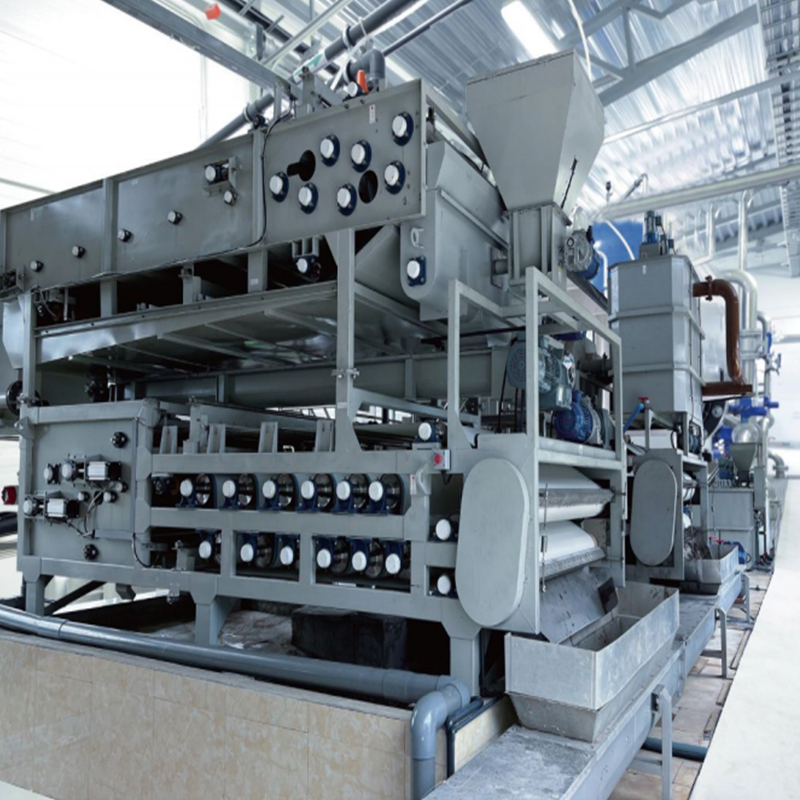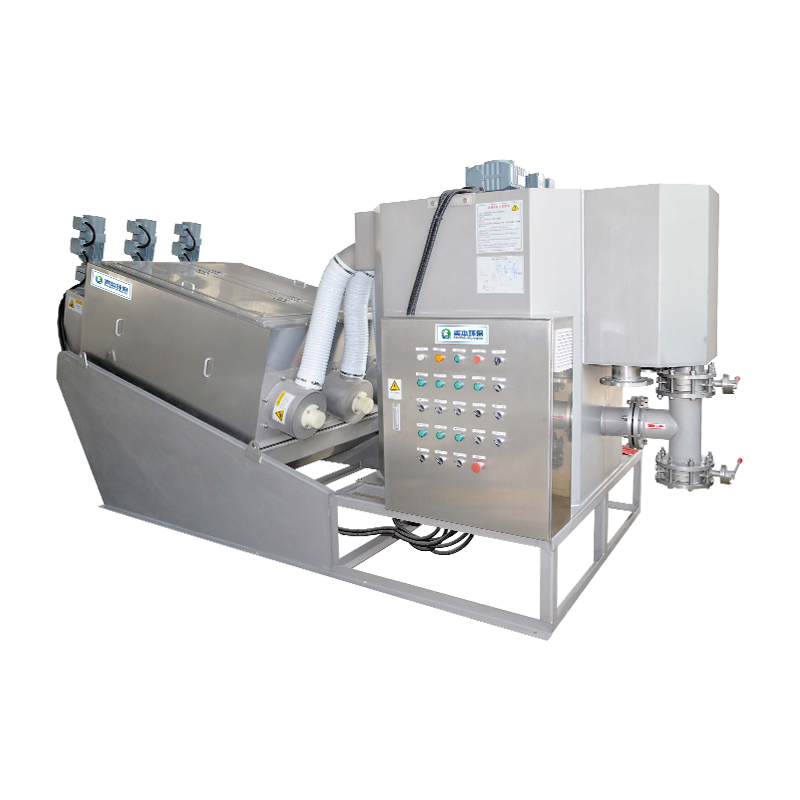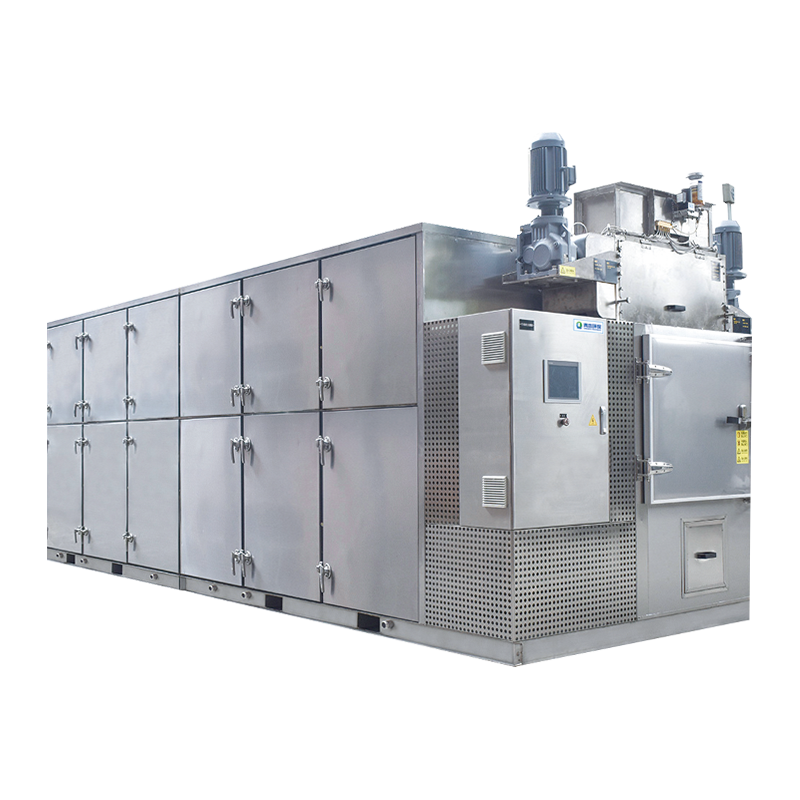


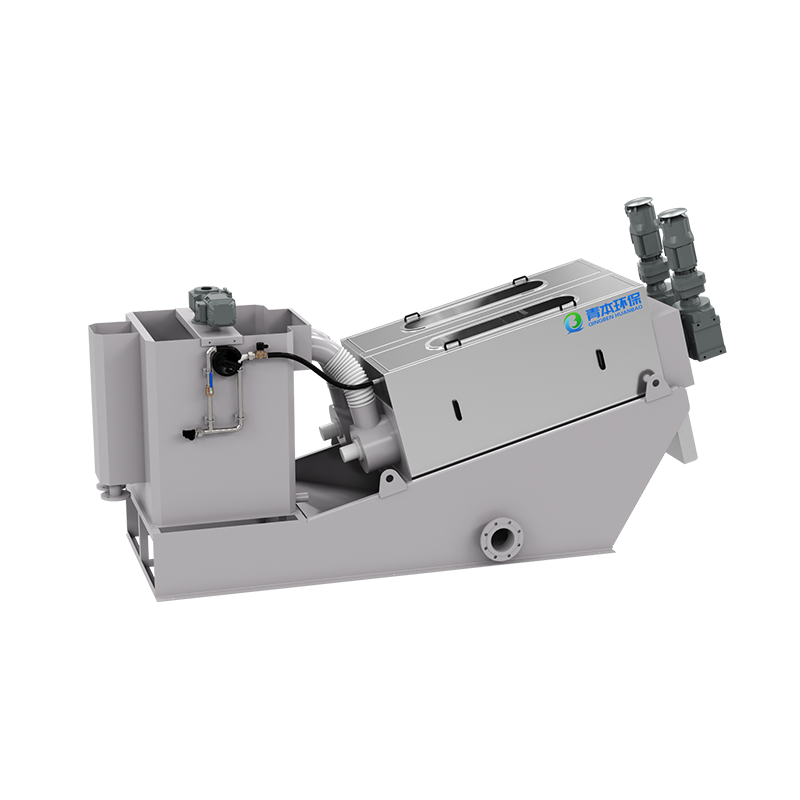

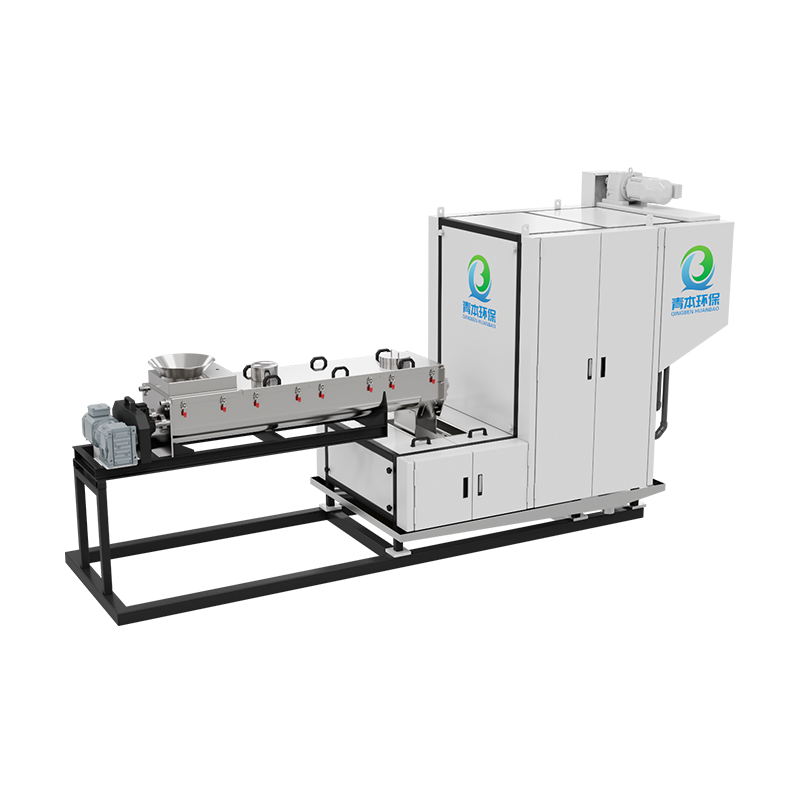

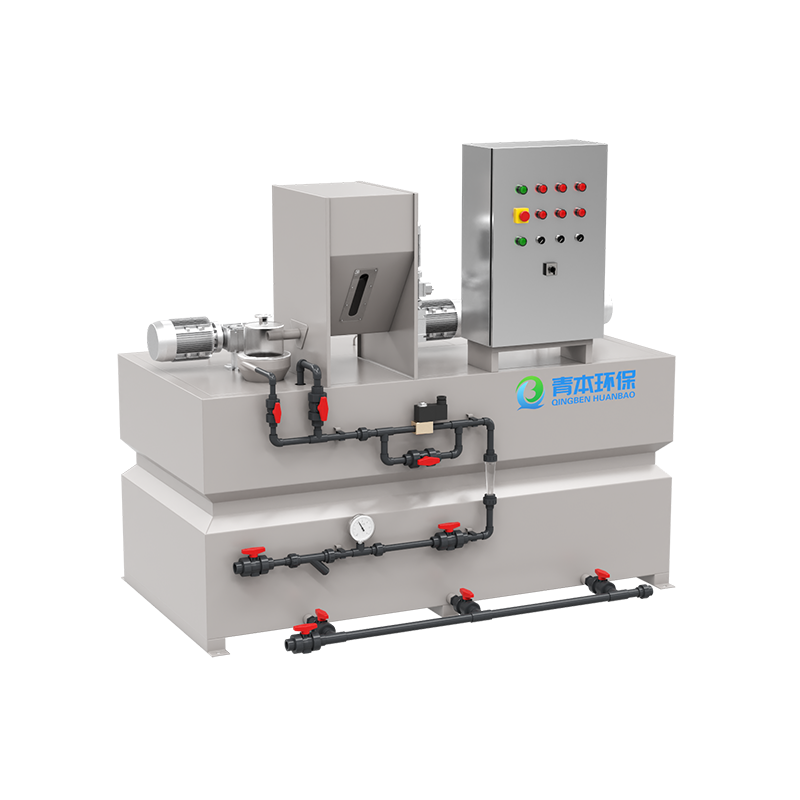

Sludge thickening is essential before dewatering because it dramatically reduces the volume of sludge fed into dewatering equipment, lowering polymer consumption, energy use, and mechanical wear — while producing a denser, more manageable cake. Without a dedicated sludge thickening step, dewatering machines must process highly dilute sludge (typically 0.5%–1.5% total solids), operating far below their rated capacity and consuming disproportionate amounts of conditioning chemicals. A screw press sludge thickener inserted upstream raises total solids concentration to 3%–6% or higher before the sludge even enters the dewatering stage, multiplying throughput efficiency by 3× to 8× and reducing overall treatment costs significantly. For wastewater treatment plants, food processors, and industrial facilities managing continuous sludge streams, the thickening stage is not optional — it is the engineering decision that determines whether the entire downstream process is economical.
What Happens Without Sludge Thickening: The Real Costs of Skipping Preconcentration
Many plant operators consider the thickening stage a capital expenditure that can be deferred or eliminated to reduce initial construction costs. In practice, skipping sludge preconcentration creates a cascade of operational penalties that consistently exceed the savings within the first year of operation. The following breakdown quantifies why sludge thickening equipment pays for itself rapidly in any continuous-flow treatment environment.
Polymer Overconsumption
Polymer conditioning agents are dosed relative to the dry solids content of the sludge, not the total volume. When dilute sludge enters a dewatering unit directly, the volume of liquid that must be handled inflates, but effective polymer contact efficiency drops. Studies across municipal wastewater plants document polymer savings of 20%–40% after installing upstream thickening — a cost reduction that in medium-to-large plants can represent tens of thousands of dollars annually.
Dewatering Equipment Overloading and Premature Wear
A screw press dewatering machine rated for 300 kg DS/h (dry solids per hour) processing 1% TS sludge must handle 30,000 liters of liquid per hour to meet that throughput. The same machine fed with 5% TS thickened sludge needs to process only 6,000 liters per hour to deliver the same dry solids output. The reduction in hydraulic load directly translates to lower drive motor current draw, reduced wear on filtration screens and screw flights, and extended maintenance intervals. Plants that bypass thickening consistently report dewatering equipment service life reduced by 30%–50% compared to those running properly thickened feed sludge.
Odor and Phosphorus Release in Holding Tanks
Dilute sludge stored in conventional gravity thickening tanks becomes anaerobic within hours, releasing hydrogen sulfide and triggering phosphorus dissolution from the sludge matrix back into the liquor. A screw press sludge preconcentration machine that processes sludge continuously from the secondary sedimentation tank eliminates long residence times in thickening tanks, cutting odor-related complaints and reducing phosphorus return loads to the biological treatment stage by 15%–30% in phosphorus-sensitive plants.
Operational Cost Increase When Thickening Stage Is Omitted (%)
Plants that omit the thickening stage report polymer costs rising by approximately 40% and maintenance frequency increasing by up to 50% compared to facilities using upstream sludge concentration equipment. Energy consumption increases of 35% reflect the hydraulic burden placed on dewatering drives when processing dilute feed sludge. Odor incident rates climb most sharply at 60%, driven by extended anaerobic residence in unprocessed sludge holding points — a compliance risk in addition to an operational one.
How a Screw Press Sludge Thickener Works: Mechanism and Process Flow
A screw press sludge thickener operates on a fundamentally different principle from gravity thickeners or dissolved air flotation (DAF) units. Understanding the mechanism helps plant engineers select the right equipment configuration and optimize feed parameters for their specific sludge characteristics.
Stacked Disc Filtration with Rotating Screw
The core of a screw press thickener is a rotating screw shaft housed within a cylindrical filtration body formed by a series of stacked fixed and movable rings with precise gaps between them. As sludge enters the feed zone, the rotating screw advances the sludge progressively toward the discharge end. The gap geometry between the rings creates a dynamic self-cleaning filtration surface: free water is continuously expelled through the gaps while the sludge cake is compacted by the increasing back-pressure toward the cone end. This stacked disc design is the reason why this category of equipment is also described as a sludge concentration machine — it achieves concentration through mechanical compression rather than gravity settling, which is both faster and far less space-intensive.
Self-Cleaning Action and Anti-Clogging Design
One of the persistent failure modes in conventional filtration-based thickeners is blinding — the progressive blockage of filter media by fine solids and biological material. The alternating fixed and movable rings in a screw press thickener address this directly: the relative motion between adjacent rings continuously dislodges solids that would otherwise accumulate in the filter gaps. This self-cleaning mechanism allows the equipment to operate continuously without flush cycles, dramatically reducing water consumption compared to belt thickeners or drum thickeners, which require periodic high-pressure washdown.
Concentration Output Range and Adjustability
Advanced screw press sludge thickening equipment achieves effluent water removal rates that produce a thickened sludge concentration stably adjustable in the range of 90%–96% water removal, meaning the output sludge contains 4%–10% dry solids by mass depending on feed characteristics and back-pressure settings. This adjustability is operationally significant: during periods when downstream deep dewatering capacity is constrained, the thickener back-pressure can be reduced to output a thinner concentrate, buffering the process without stopping the upstream treatment flow.
Sludge Treatment Process Flow: Thickening to Final Disposal
The process flow above shows how a screw press thickener fits between the secondary sedimentation tank and the downstream deep dewatering stage. Sludge drawn directly from the secondary clarifier enters the thickener, where free water is separated and returned to the plant headworks as clarified filtrate, while the concentrated sludge cake is conditioned with polymer before entering the dewatering press. This continuous inline configuration eliminates the need for a dedicated thickening tank and associated aeration or agitation systems, significantly reducing civil construction requirements and the plant's physical footprint.
Comparing Sludge Thickening Technologies: Screw Press vs. Gravity vs. DAF
Plant engineers evaluating sludge thickening equipment options typically compare three principal technologies: gravity thickeners (conventional tank-based settling), dissolved air flotation (DAF) units, and stacked screw press thickeners. Each has distinct characteristics in terms of installation requirements, operational complexity, and output quality.
| Parameter | Gravity Thickener | DAF Unit | Screw Press Thickener |
|---|---|---|---|
| Output TS (%) | 2%–4% | 3%–6% | 4%–10% |
| Footprint | Large (tank construction) | Medium | Compact (no tank needed) |
| Odor Risk | High (anaerobic residence) | Low–Medium | Low (short residence time) |
| Energy Consumption | Low | High (compressor, recycle pump) | Very Low |
| Automation Level | Low (manual rake, draw-off) | Medium | Fully automatic PLC control |
| Civil Construction | Major (reinforced concrete tank) | Moderate | Minimal (skid-mounted unit) |
| Maintenance Complexity | Low–Medium | High (dissolved air system) | Low (self-cleaning design) |
The screw press thickener's combination of high output TS concentration, minimal footprint, low energy demand, and full automation makes it the preferred choice for new-build wastewater treatment plants and retrofit projects where space, odor control, and operational labor are constrained. DAF units remain competitive for waste activated sludge (WAS) with very low initial TS, where flotation physics outperforms mechanical compression in the early concentration range. Gravity thickeners retain a cost advantage in very large plants where raw primary sludge is the dominant feed type and land availability is not a constraint.
Performance Radar: Screw Press Thickener vs. Conventional Thickening Methods
A multi-dimensional performance comparison helps procurement engineers and plant managers communicate equipment value to decision-makers. The following radar visualization scores each thickening technology across six dimensions most relevant to industrial sludge thickener procurement: output concentration, energy efficiency, odor control, automation capability, space efficiency, and maintenance ease.
Thickening Technology Radar (Score 1–10)
The screw press thickener achieves the highest composite performance score across all six dimensions, with particular dominance in output concentration, energy efficiency, and space utilization — the three parameters most directly tied to operating cost and site constraints. The gravity thickener scores competitively on energy efficiency and maintenance ease but falls significantly behind on odor control and automation, making it increasingly unsuitable for urban or peri-urban treatment facilities facing community relations and staffing pressures. The DAF unit performs well on output concentration and odor control but carries the highest energy demand of the three technologies, limiting its economic case in energy-constrained operational environments.
Global Sludge Treatment Equipment Market: Growth Drivers and Procurement Trends
The market for sludge treatment equipment — including thickening, dewatering, and drying systems — has experienced consistent growth driven by tightening effluent discharge regulations, expanding urban wastewater infrastructure in developing economies, and increasing industrial environmental compliance requirements. Understanding this context helps procurement managers and treatment plant operators time equipment investments appropriately.
Global Sludge Treatment Equipment Market Size (USD Billion, 2019–2026E)
The global sludge treatment equipment market is projected to grow from USD 8.2 billion in 2019 to approximately USD 15.3 billion by 2026, representing a compound annual growth rate of roughly 9.3%. This expansion is driven by mandatory sludge volume reduction requirements in China's 14th Five-Year Plan, the EU Sewage Sludge Directive revision, and accelerating wastewater infrastructure investment across India, Southeast Asia, and the Middle East. The screw press thickener segment specifically has outpaced the broader market due to its advantages in retrofitting existing plants without civil construction — a procurement preference that has become dominant in upgrade-rather-than-rebuild project cycles.
For buyers evaluating wholesale sludge thickening equipment or working with an OEM sludge thickener manufacturer, the current market environment reflects strong institutional procurement activity from municipal utilities, food and beverage processors, pharmaceutical manufacturers, and paper mills — each with distinct sludge characteristics requiring configurable thickening solutions rather than one-size-fits-all products.
Key Selection Criteria for Screw Press Sludge Thickener Procurement
When sourcing a screw press sludge thickener from a manufacturer or supplier, the following technical and commercial criteria are most critical to evaluate before finalizing equipment specifications and vendor selection.
- Sludge Feed Characteristics: Input total solids (TS) concentration, volatile solids ratio, temperature, and pH all affect thickener sizing and ring gap selection. Request that the manufacturer perform treatability testing on a representative sludge sample before confirming equipment specifications.
- Target Output TS Range: Define whether the thickener output will feed a screw press dewatering machine, a high-pressure membrane filter press, or a belt press — as each downstream machine has a different optimal feed TS range. The thickener back-pressure setting must be configurable to match.
- Throughput Capacity (kg DS/h): Size the thickener to handle peak daily sludge production, not average daily flow. Municipal plants typically experience 1.5× to 2× the daily average during storm events or seasonal load peaks.
- Automation and Control Integration: Confirm that the thickener PLC is compatible with the plant's SCADA system and can provide real-time data on feed rate, output TS, filtrate clarity, and drive motor current. Remote monitoring capability is increasingly standard for facilities with lean staffing models.
- Materials of Construction: For aggressive sludge types (high chloride content, acidic industrial waste), specify 316L stainless steel for all wetted parts rather than standard 304. Confirm that the filtration rings are manufactured from wear-resistant grade stainless, not cast polymer, which degrades under abrasive sludge.
- After-Sales Support and Spare Parts Availability: A reliable sludge thickener factory or sludge treatment equipment supplier will maintain a local spare parts inventory for critical wear components — filtration rings, bearings, screw flights, and shaft seals — and provide remote diagnostic support within 24 hours of a service request.
Procurement Engineer Priority Scores for Thickener Selection Criteria (/10)
Procurement engineers surveyed across municipal and industrial treatment projects rated output TS performance as the top selection criterion (9.4/10), followed closely by after-sales support availability (9.2) and automation level (9.0). Odor control (8.8) and equipment footprint (8.5) ranked slightly lower in absolute priority but frequently become decisive factors in urban plant upgrades where community relations and physical space are the binding constraints. Material of construction (8.2) drives specification decisions primarily when industrial sludge with aggressive chemical characteristics is involved.
About Qingben Environmental Technology (Jiangsu) Co., Ltd.
Qingben Environmental Technology (Jiangsu) Co., Ltd. is a professional enterprise specializing in the manufacturing and service of sludge and wastewater treatment equipment. The company is rooted in the field of sludge and wastewater treatment equipment research and development, offering a comprehensive product range including screw press sludge dewatering machines, sludge drying equipment, complete sets of wastewater treatment equipment, river and lake sediment drying equipment, and associated technical services.
The company's stacked screw thickener inherits the technical characteristics of low energy consumption, high efficiency, fully automatic control, and stable operation from its cascade sludge dewatering machine platform. It is capable of directly processing sludge from the secondary sedimentation tank rapidly and continuously, producing a thickened sludge concentration that is stably adjustable in the range of 90%–96% water removal. This eliminates the need to build a conventional concentration tank, reducing infrastructure investment and land area requirements while effectively suppressing odor and phosphorus release during the thickening phase.
Qingben's screw press sludge thickener is designed to function as pretreatment equipment for sludge dewatering and deep dewatering systems, and is compatible with high-pressure elastic presses, high-pressure diaphragm plate frames, and other downstream dewatering technologies. As a professional screw press sludge thickener manufacturer and sludge thickener factory, Qingben supports OEM configurations, wholesale procurement, and custom engineering for project-specific treatment requirements.
Frequently Asked Questions
Q1. What is a screw press sludge thickener used for?
A screw press sludge thickener is used to increase the total solids concentration of dilute sludge — typically from 0.5%–1.5% TS up to 4%–10% TS — before it enters a dewatering machine. This preconcentration step reduces the hydraulic load on downstream equipment, lowers polymer consumption, and improves overall dewatering efficiency and cake dryness.
Q2. Does a screw press thickener require a separate thickening tank?
No. One of the primary advantages of a stacked screw press thickener is that it eliminates the need for a conventional gravity thickening tank. It processes sludge continuously and directly from the secondary sedimentation tank as a compact, skid-mounted unit, reducing civil construction requirements and the associated land footprint significantly.
Q3. What concentration range does a screw press thickener achieve?
Advanced screw press sludge thickeners achieve a stable, adjustable water removal rate in the range of 90%–96%, meaning output sludge contains approximately 4%–10% dry solids by mass. The exact output concentration is adjustable via the back-pressure setting on the discharge cone, allowing operators to match the feed requirements of different downstream dewatering machines.
Q4. Is a screw press sludge thickener compatible with high-pressure filter presses?
Yes. Screw press thickeners are designed to function as pretreatment equipment for a range of downstream dewatering systems, including high-pressure elastic presses, high-pressure diaphragm plate frames, and belt presses. The thickened output provides the optimal feed TS range for these systems to operate efficiently and produce a dry, handleable cake.
Q5. How does a screw press thickener reduce odor and phosphorus release?
By processing sludge continuously and directly from the secondary clarifier with a very short residence time, the screw press thickener prevents the prolonged anaerobic conditions that cause hydrogen sulfide generation and phosphorus dissolution in conventional holding tanks. Plants adopting this approach report odor incident reductions of 40%–60% and phosphorus return load reductions of 15%–30% compared to gravity thickening alternatives.
Q6. Can screw press thickeners be customized for OEM or industrial applications?
Yes. Professional sludge thickener manufacturers offer OEM configurations covering custom capacity ranges, materials of construction (304 or 316L stainless steel), control system integration, and enclosure options for odor containment. Industrial applications such as food processing, pharmaceutical manufacturing, and paper mills typically require application-specific sizing and material selection that OEM-capable factories can accommodate with engineering support.